Feedback
Patient feedback analytics in EDFlow: the five-question post-visit survey, the in-visit pulse, response rates, top-box shares, comments hidden when they may contain personal information, and family feedback.
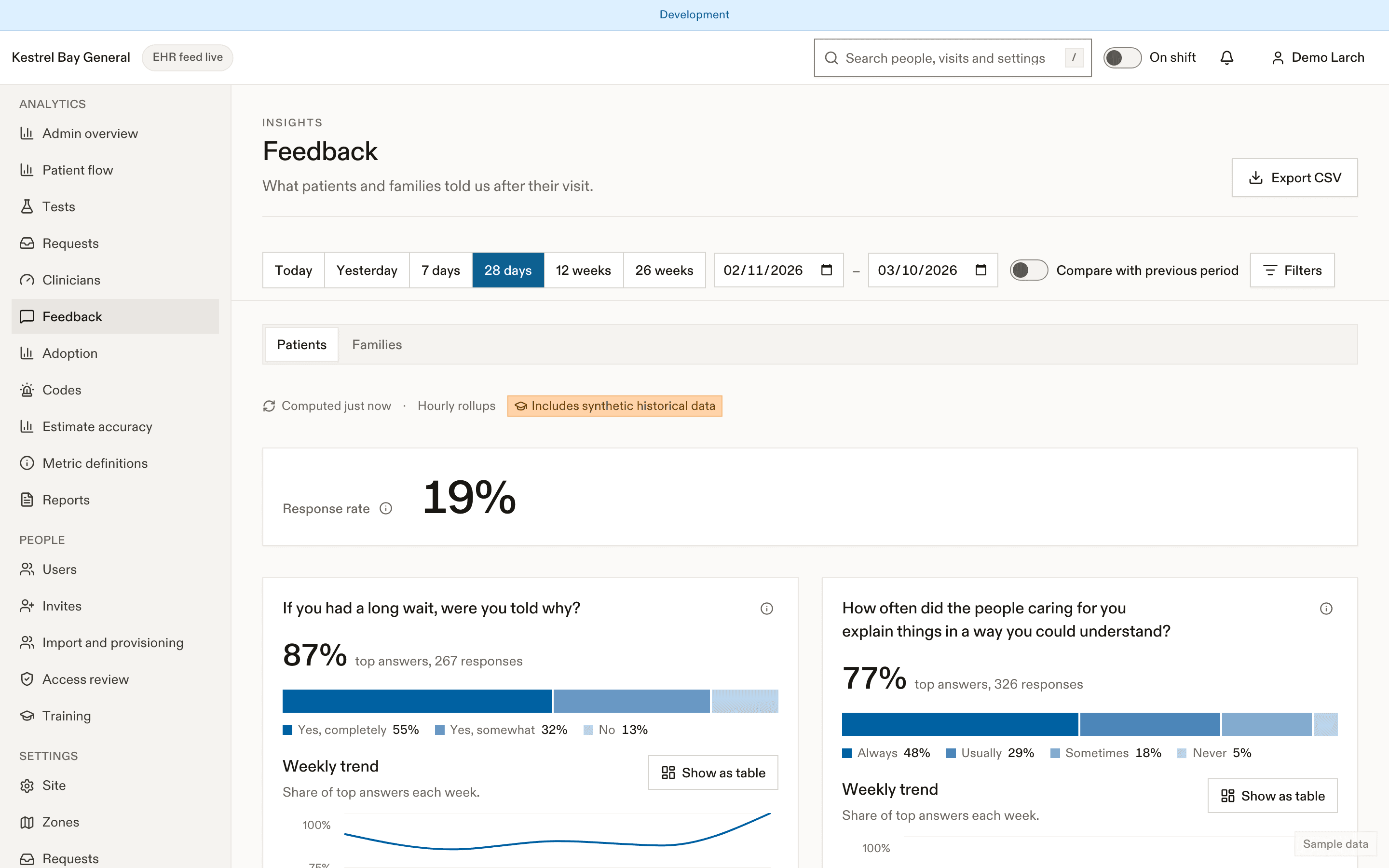
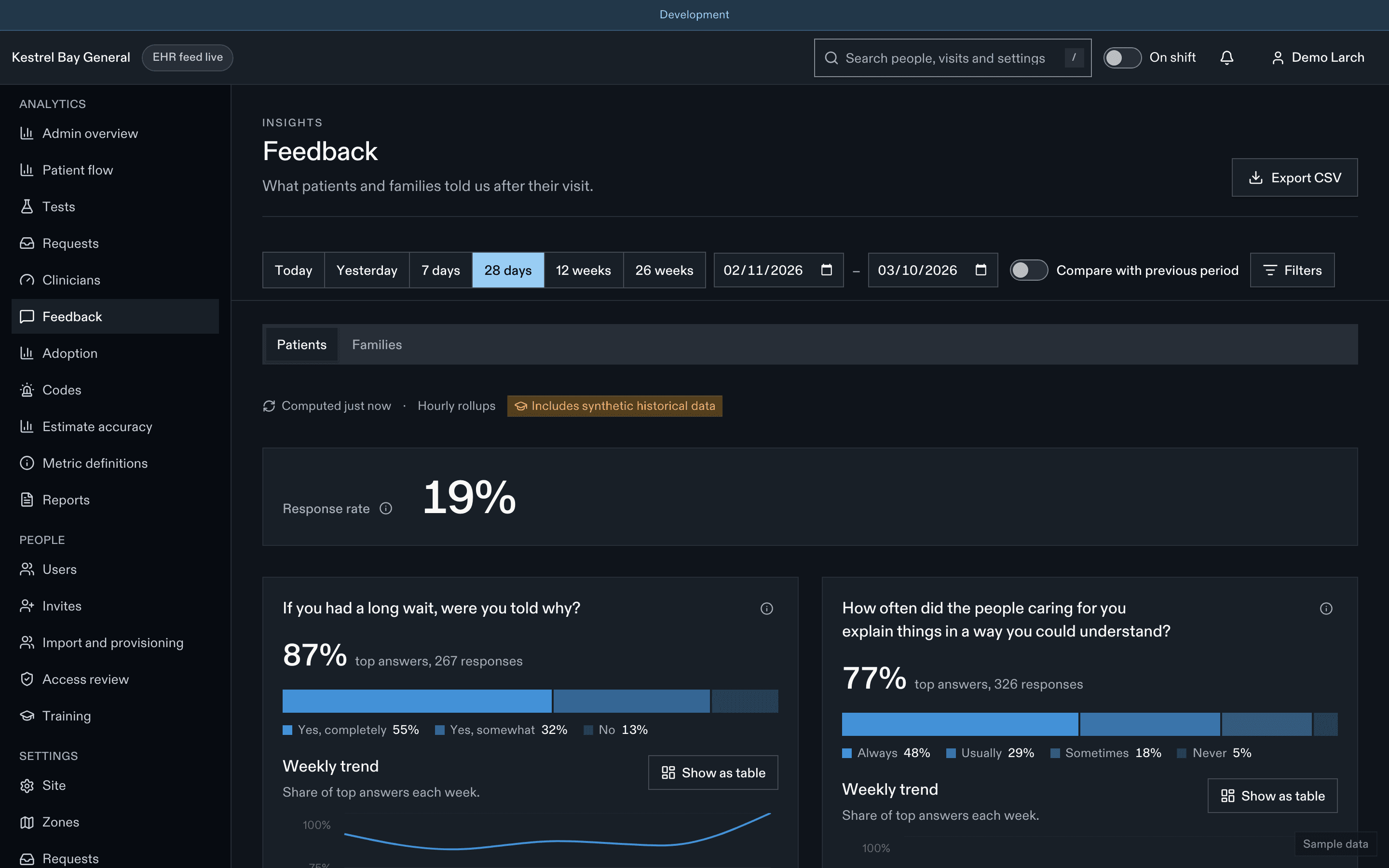
The survey
After leaving, patients answer five questions (one submission per visit):
- If you had a long wait, were you told why?
- How often did the people caring for you explain things in a way you could understand?
- Did EDFlow help you know what was happening during your visit?
- Did you get enough information about what to do if you were worried about your health after you left? (home departures only)
- Overall, how would you rate your care in the emergency department? (0 to 10)
Plus an optional comment and, where the site runs a study, a separate research-contact consent.
During the visit, a pulse card asks "How well are we keeping you informed?".
What's on the page
- Response rate, distribution and trend per question, top-box share.
- Filters by language, age band and departure kind.
- Comments: comments the scrubber flags as possibly containing personal information stay hidden until someone clicks Show (audited). Managers can redact a comment permanently.
- Family feedback (three questions, release 1.1) in its own tab.
Related success metrics
M-01 (told why about a long wait), M-02 (helped a lot), M-03 (top box), M-04 (information for after leaving). See For hospitals.
Dernière mise à jour le
Cette page vous a-t-elle été utile?
Clinician metrics
Per-physician step metrics in EDFlow: attribution, the blinded and named views, case-mix context, the minimum sample size, governance, and why there are never ranks or league tables.
Adoption and equity
Who uses EDFlow in your ED: the activation funnel from card to feedback, broken down by preferred language, age band, arrival mode and platform, and the equity panel that flags gaps over 10 points.